Five Tonnes Saved: On the House Steps Up in Stratford
When a car struck a power pole in Stratford recently, it caused an unexpected power outage at the local Woolworths store, putting around five tonnes of chilled and frozen food at risk.
Our Taranaki-based food rescue member, On The House, stepped in quickly. Drawing on strong systems and trusted partnerships with Woolworths and local community groups, the team recovered and redistributed all five tonnes, ensuring this quality food safely reached whānau instead of landfill, despite the organisation already operating at full capacity.
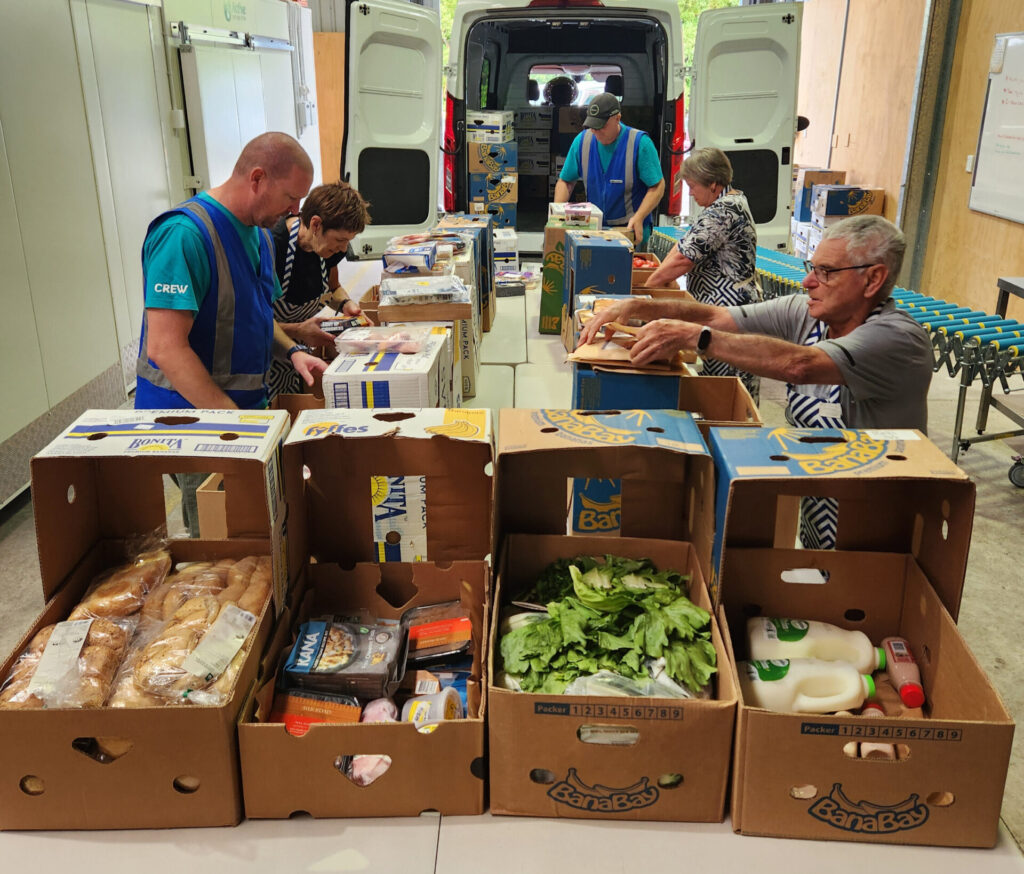
With On The House’s Free Stores busier than ever and storage space tight, General Manager Terry Hancock worked closely with community groups to help absorb and redistribute the sudden influx of food, ensuring nothing was wasted, even as many partners were already operating at or near capacity themselves.
“Right now, demand for food support continues to surge, and there’s more good food available than we have the capacity to handle,” Terry says. “We’ve been incredibly fortunate to secure major funding for infrastructure improvements, but until that’s fully in place, we’re relying on the strength of our community partnerships to make sure good food keeps flowing to people who need it.”
In February, the Stratford Free Store served a record 181 households in a single evening, the highest number recorded at any Free Store since the organisation began. New Plymouth sessions regularly see up to 160-165 households in one hour, while over 65s sessions are also reaching record attendance.
On any given evening, the queue represents a cross-section of the community: families, pensioners, tradies, students, people between jobs, and those facing unexpected bills. As Terry says, “Everyone’s welcome.”
Growing to Keep Up
To meet growing demand, On The House is expanding. Its Thursday Free Store is moving from Holy Trinity Church in Strandon to Northpoint Baptist Church in Bell Block, a larger venue that will allow more space, better flow, and the ability to serve more whānau safely and with dignity.
At the same time, the organisation is working to complete critical infrastructure upgrades, including expanded cold storage, improved sorting space, and a new electric refrigerated truck. Right now, more good food is available from suppliers than On The House has the capacity to handle. Without the right infrastructure, perfectly good kai risks being turned away.
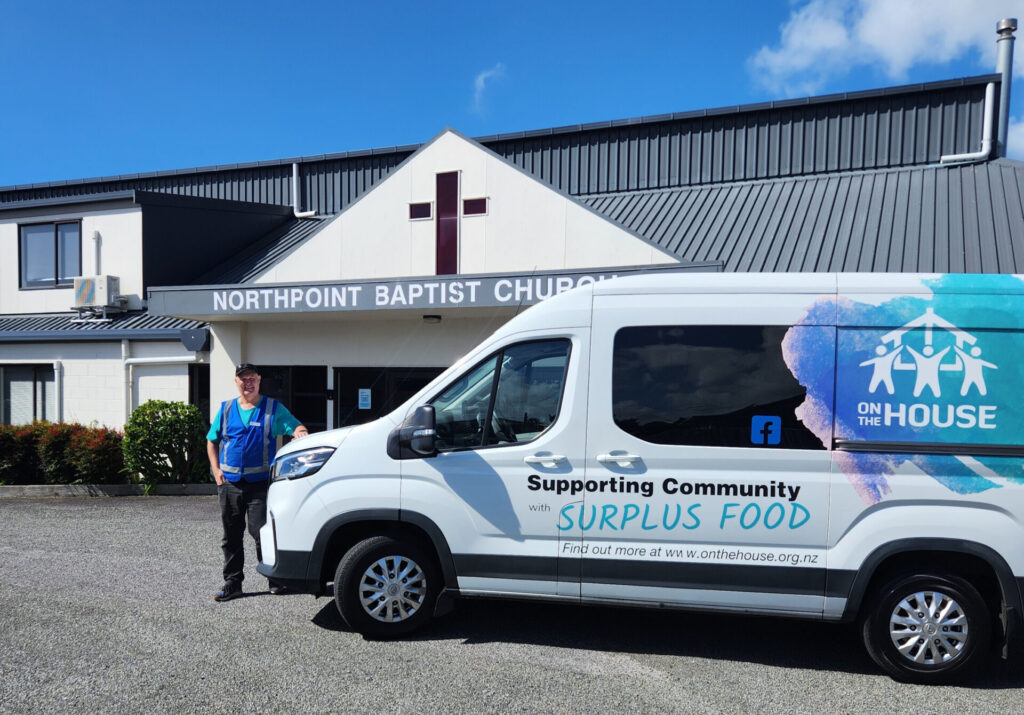
Terry at the new facility: Northpoint Baptist Church in Bell Block
Essential Community Infrastructure, But Stretched
Stories like the Stratford power outage show why food rescue is essential community infrastructure. When the unexpected happens, organisations have the expertise, food safety systems, and trusted relationships to respond immediately — ensuring good food feeds people, not landfill.
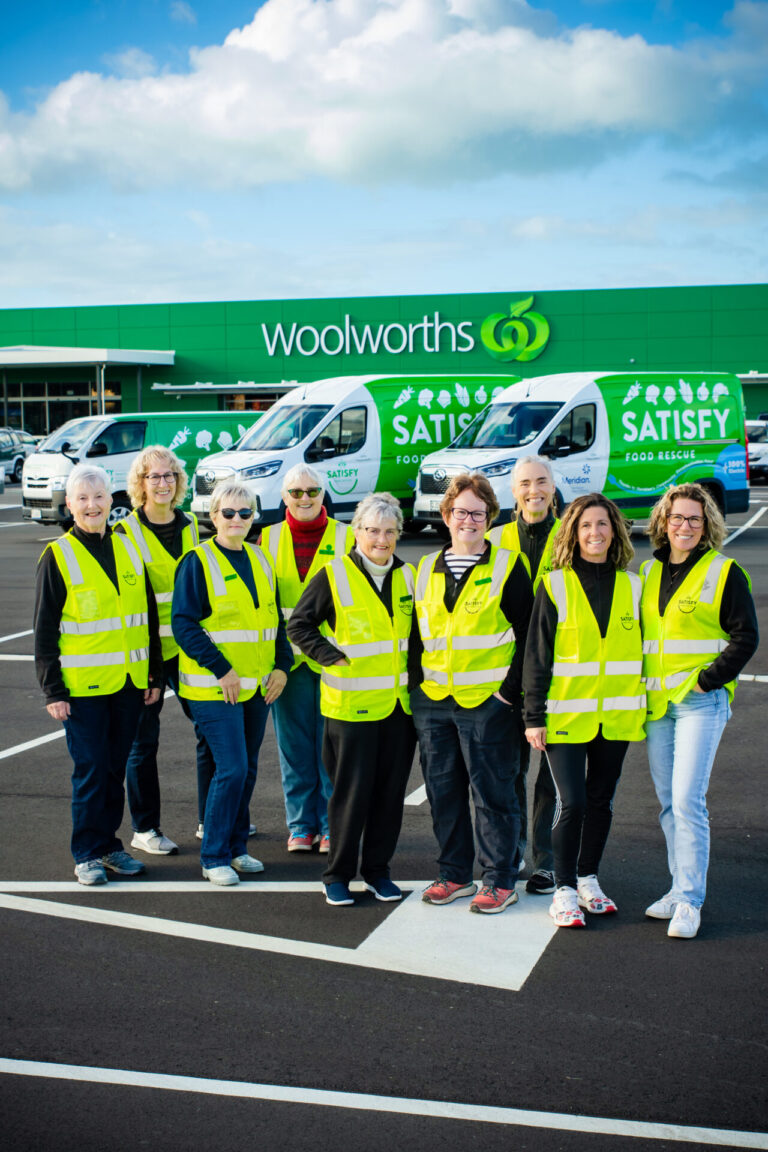
We’re hugely grateful for partners like Woolworths, whose commitment makes this work possible. As Gordon Harcourt, Woolworths Community Programmes & PR Manager, shared: “Food rescue is hugely important to Woolworths. Every store has at least one food rescue partner and during our last financial year we donated well over 4,000 tonnes of safe, surplus food, equivalent to about eight million meals. This year we’ll invest around $1 million in cash grants to 30 food rescue partners across Aotearoa, including On The House in Taranaki.”
Food rescue reduces waste, lowers emissions, and strengthens local food systems, all while helping households navigate rising living costs. But across Aotearoa the sector is under sustained pressure. Demand is rising, food supply remains strong, yet what’s missing is consistent infrastructure funding to scale safely and sustainably. With stable government investment, alongside continued business and community support, organisations like On The House can continue ensuring good food feeds people, not landfill.